PostNL
Scaling B2B Logistics: initiating the mobile first shipping flow to drive a 400% volume increase
PostNL's business customers were increasingly "on the move," yet the company’s digital tools remained tethered to the desktop. As the Lead UX Designer, I recognized a massive gap in our mobile offering: the inability to create shipments via the app.

My role
Product design & strategy UX researcher
Team
Engineers PO UX researcher Designer (me)
Timeline
6 Months Part-time
Delivery
2025
Overview
Context
PostNL’s B2B digital tools were historically tethered to the desktop, creating a significant bottleneck for business customers who were increasingly managing logistics directly from warehouses and loading docks. As the Lead UX Designer, I recognized a massive "mobile gap": users were increasingly "on the move," yet were forced to walk back to their desks to perform simple logistics tasks, causing significant delays in their shipping cycles.
The Challenge
Internal stakeholders were highly skeptical, believing that the precision of a mouse and a large screen were non-negotiable for complex B2B tasks. My task was to identify the mobile opportunity, overcome this organizational bias, and design a high-converting mobile shipping experience from scratch that addressed the growing trend of mobile-first field operations.
Constraints
Internal Bias: Strong institutional belief that "B2B is for Desktop."
Legacy Systems: The existing portal was too dense for a simple mobile port, requiring a total architectural rethink.
Research Barriers: Legal and contractual restrictions blocked direct contact with B2B customers, preventing traditional interviews or panel-based testing.
Solution
I led a data-driven, three-phase design strategy. After securing roadmap priority through a "Fake Door" validation test, I launched a lean MVP. Through iterative data analysis and a critical "Pivot" in the shipping flow, I eventually scaled the feature with a high-fidelity "Template" system that allowed power users to ship in just two taps.
2. Discovery & validation
I needed a low-risk, high-impact way to turn anecdotal signals into an unshakeable business case to secure roadmap priority.
The spark: internal assumptions vs. user signals
While the internal vision for the app was strictly "companion-only," signals from NPS scores and ongoing customer conversations began to tell a different story. Users were explicitly asking for shipment capabilities, yet there was significant resistance to adding a multi-step funnel to the app's roadmap.
Adapting to constraints
Because traditional recruitment was blocked by legal restrictions and the lack of a customer panel, I initiated a "Fake Door" test as our primary validation tool.
The Strategy: Since we couldn't call them, we let them come to us. We placed a "Create Shipment" button in the app and captured intent data in real-time.
Quantitative Data: Within 30 days, the button became one of the top 3 most interacted-with elements, proving massive latent demand.
Qualitative Insights: We attached a 1-question survey to the "Fake Door" landing page, allowing us to gather insights from hundreds of users that we otherwise wouldn't have been allowed to contact.

The perception gap
Our research highlighted a stark contrast between the legacy "desktop-first" vision and the emerging need for mobile productivity:
General sentiment (foundational research):
These insights from previous research and NPS signals formed the initial 'companion-only' vision for the app.
"I only have the addresses on my laptop. I find it more comfortable to do this with a mouse, keyboard, and large screen. I prefer to do that on the laptop; it works the fastest."

Fake door survey feedback:
Real-time intent captured from the micro-survey during the validation phase.
"During my break at work, I create the shipment via the app, so in the evening I only need to print the label. It's best if I can print those labels directly from my phone; then I don't have to grab my laptop when I get home."

3. The Solution
I led a cross-functional squad (Product and Engineering) through three iterative phases, maintaining a "Build-Measure-Learn" loop.
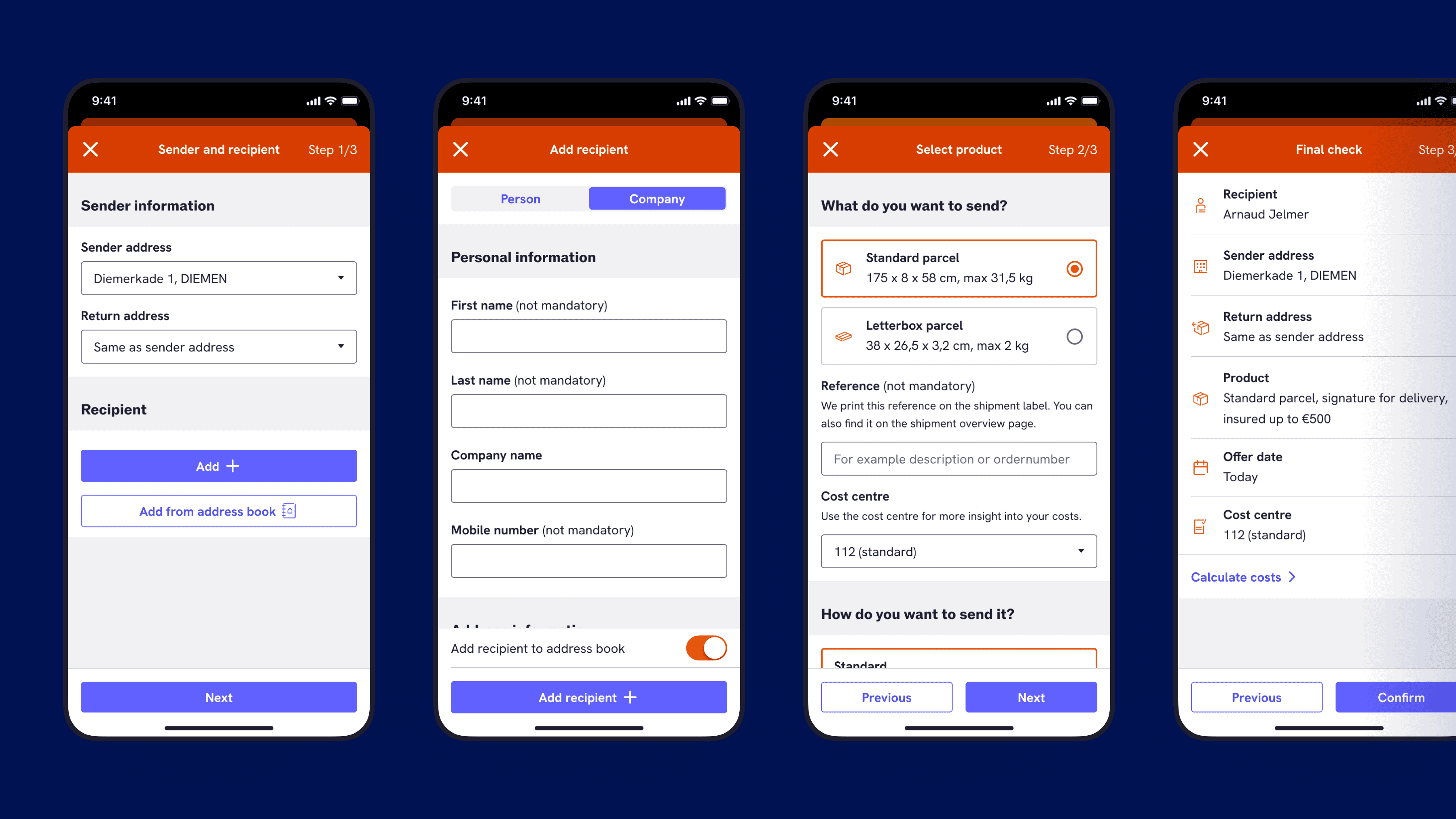
Phase 1: The lean MVP & guerrilla testing
To maintain momentum, I prioritized speed-to-market. I conducted guerrilla first-click testing and internal "expert reviews" to bypass the lack of a formal panel. We used a matrix of product usage frequency vs. implementation cost to focus on high-volume incidental shipments, maximizing value while minimizing technical debt for the launch.
Phase 2: MVP launch & the pivot
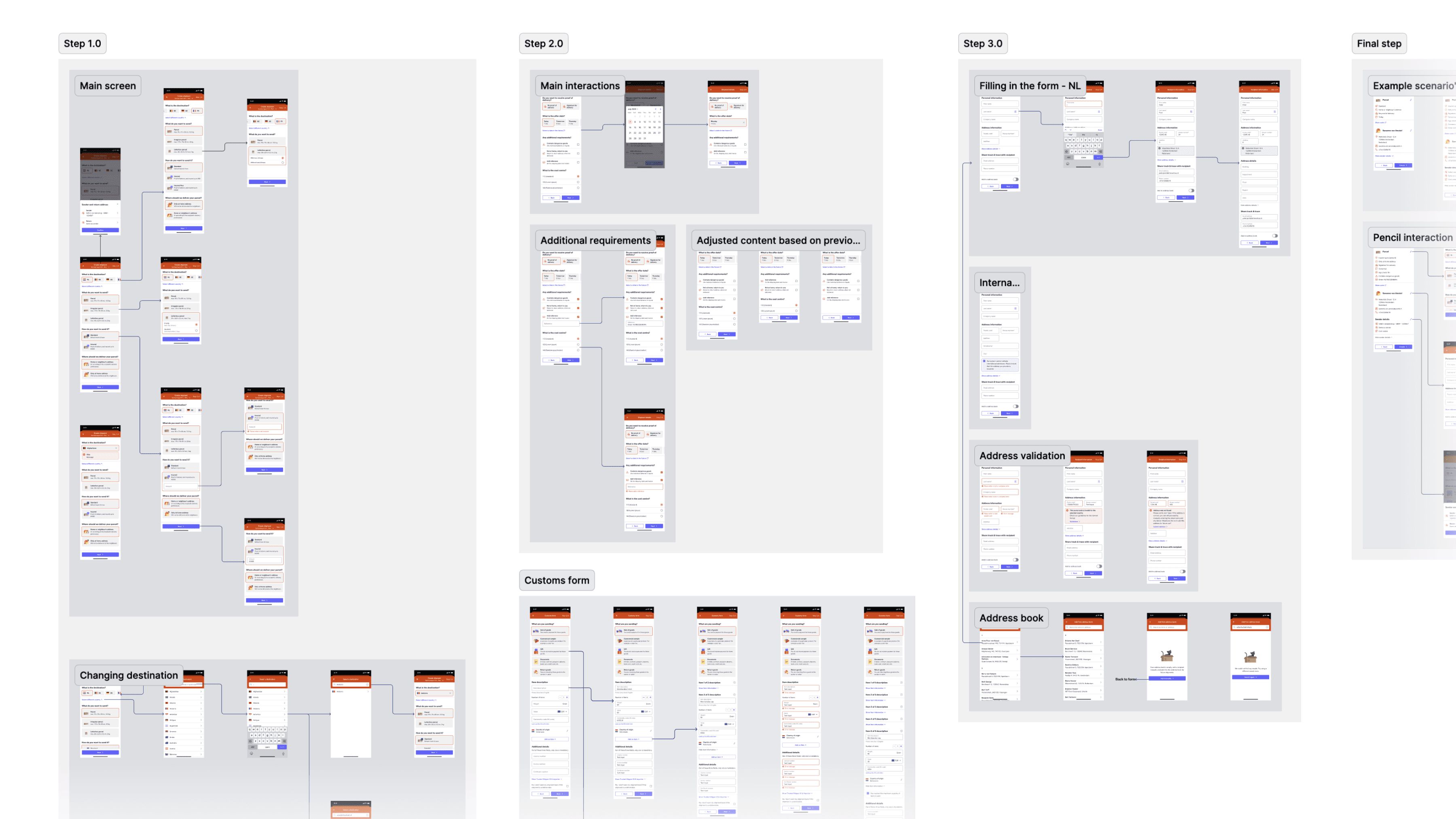
Post-launch analytics revealed a 40% dropout rate at the recipient validation step—a critical friction point.
The Fix: I redesigned the flow to land users directly on the shipping form, integrating the address book as a "search-as-you-type" feature rather than a separate step.
The Rationale: By removing an unnecessary "choice" screen, we reduced cognitive load for the single-recipient use case typical of mobile.
The Result: This structural change reduced the dropout rate by 15%.
Phase 3: Scaling with "Templates"
To transition from a functional tool to a "power tool," I moved from reactive fixes to proactive innovation.
Exploration
I conducted exploratory research and interviews with power users to understand recurring shipping behaviors and identify specific triggers for automation in the mobile context.
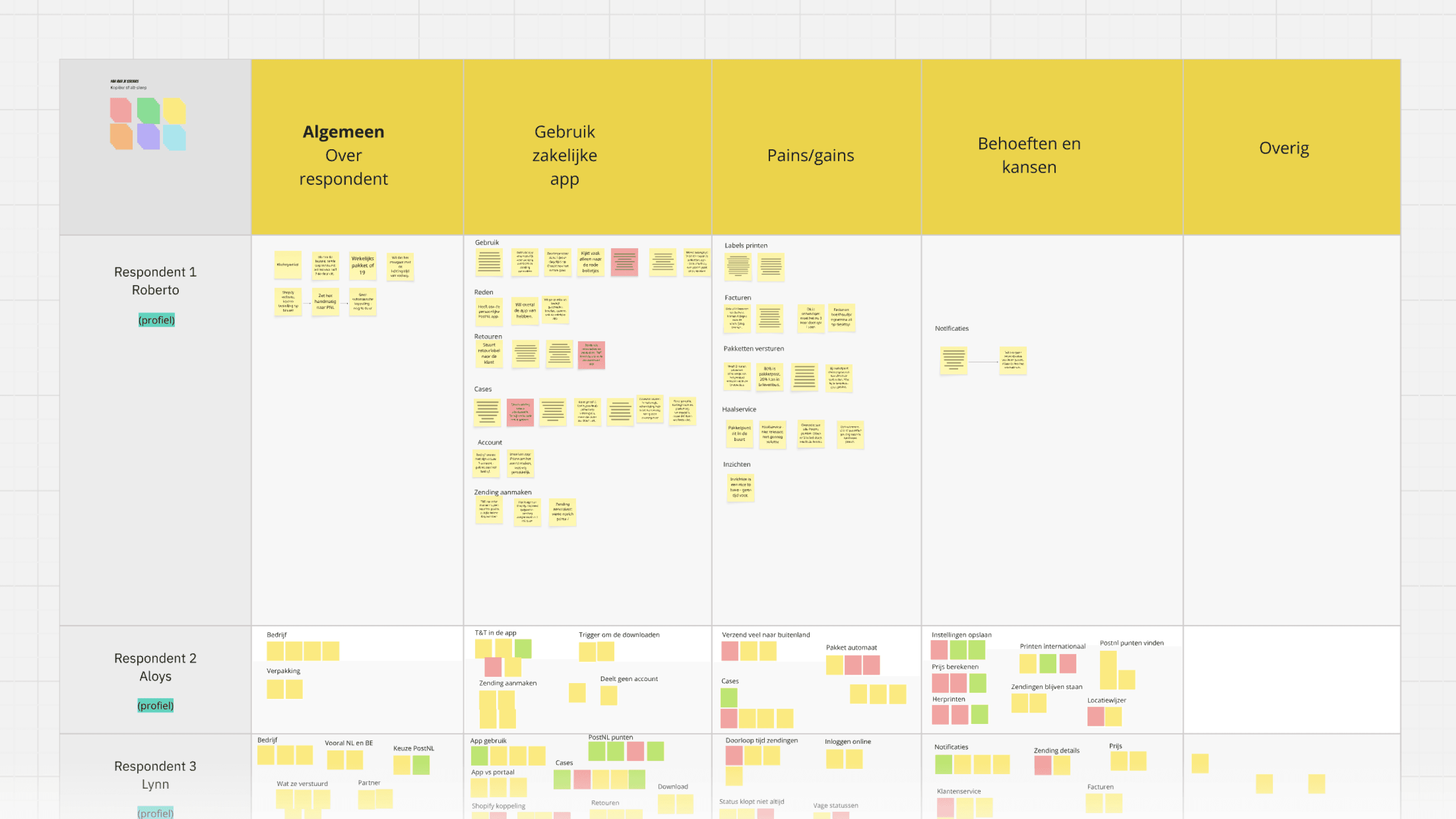

The concept of templates:
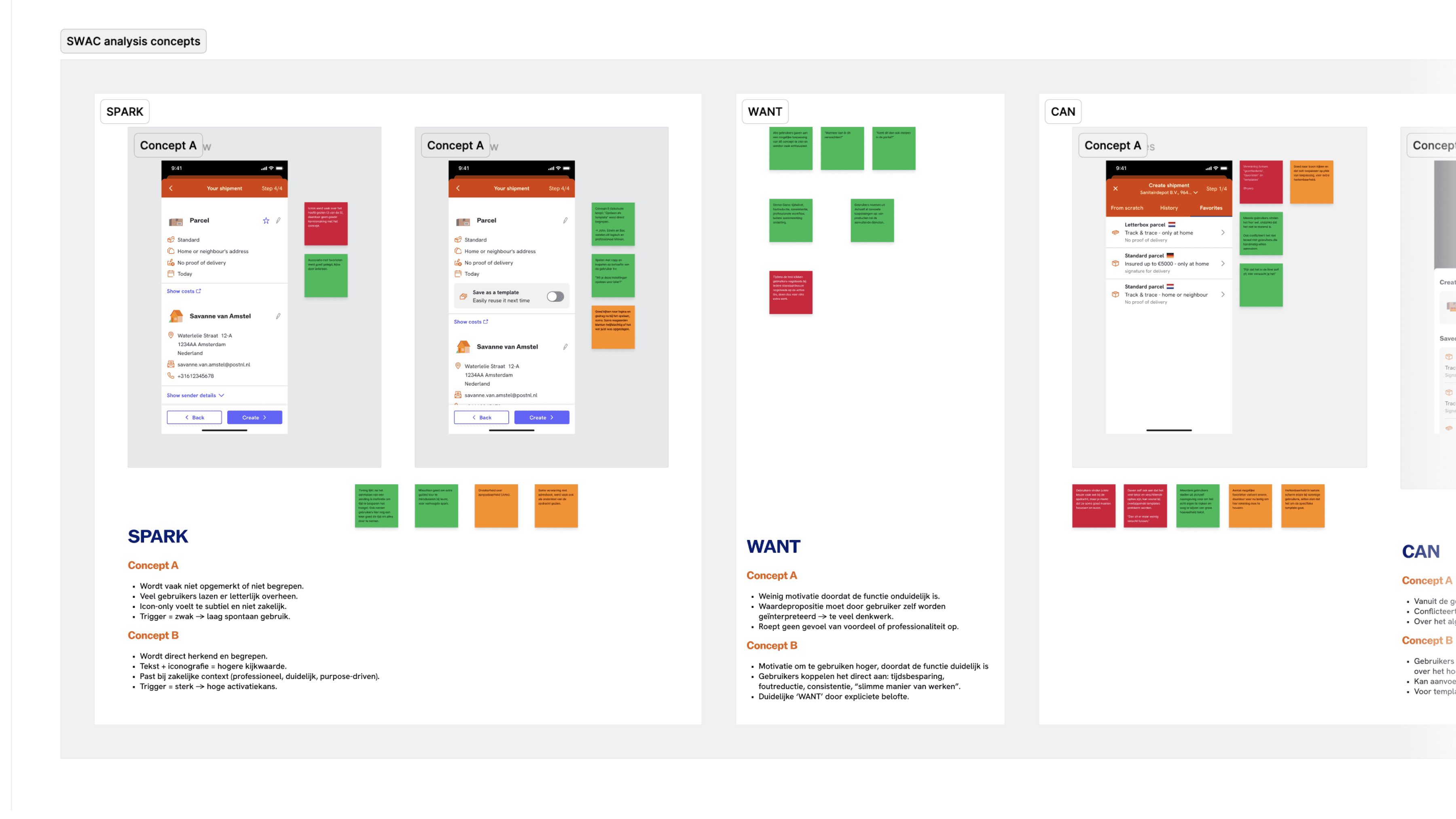
Based on these insights, I sketched and compared two conceptual models: one based on "Recent Shipments" and another on "Saved Presets" (Favorites). The "Favorites" model was selected for its ability to provide long-term efficiency and user control for recurring shipments.
Usability Test: Having secured budget through MVP success, I pushed for formal testing with 6 verified B2B customers. I focused on validating the mental model of "presets" and identified critical frictions in the template retrieval process.

Final product
I developed the high-fidelity "Templates" system that pre-fills package dimensions and shipping labels based on user-defined presets. This final implementation reduced the entire shipping process to just two taps, cutting the Time-on-Task by 30%.

Impact
Within six months, the feature fundamentally changed the app's value proposition, turning it into a primary productivity hub.
The Growth Story: From MVP to End State
MVP launch | Now | Growth | |
|---|---|---|---|
Monthly Shipments (Pre-notified) | 2,059 | 10,097 | +400% |
Task Success Rate | 60% | 73% | +21% |
Interaction Popularity | Top 7 | Top 3 | Feature Adoption |
Unique Logged-in Visitors | 2,034 | 5,096 | +150% |
Monthly Visits | 17,023 | 38,581 | +126% |
Avg. Time on Site | 04:33 | 05:24 | +18% |
Avg. vies per visit | 7.53 | 12.98 | +72,38% |
Influencing organizational mindset
Perhaps the biggest win was a mindset shift within PostNL. The success of this project proved that business customers value in-depth features on mobile when they provide clear added value, encouraging the organization to embrace more complex mobile features.
Reflection
Lessons Learned
Strategic resourcefulness: When traditional research is blocked, lean methods like "Fake Door" tests and micro-surveys are vital for data-driven advocacy.
Evolutionary design: Moving from 2k to 10k shipments taught me that "usable" isn't enough; scaling requires efficiency-focused features like Templates.
Leadership in constraints: I learned how to champion user needs and deliver a "gold standard" experience within the rigid constraints of a large corporate environment.